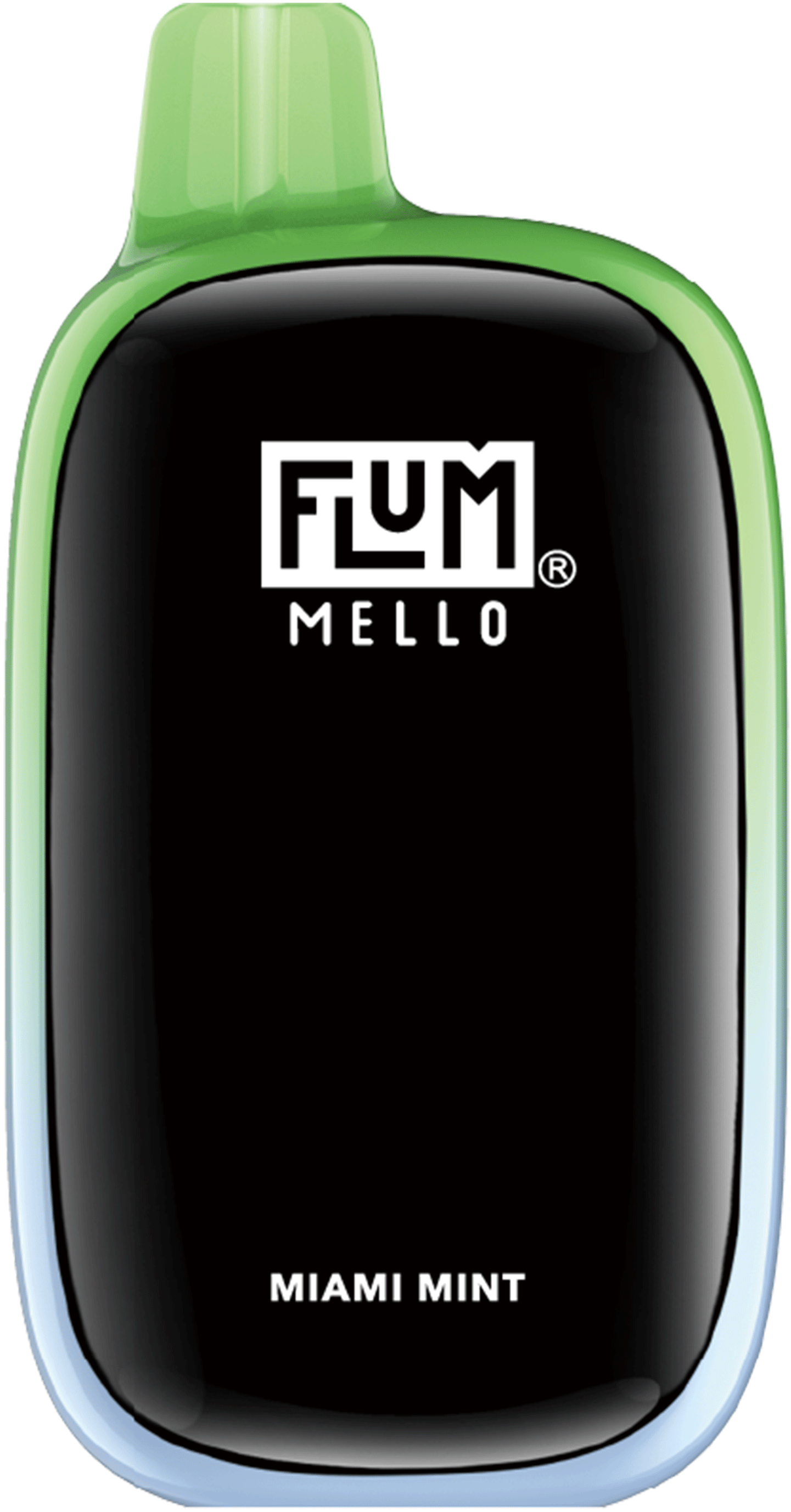
SKU: 52910983053
flum mello flavors list

flum mello flavors list Mello Serires – FLUM

Sale price$24.05 Regular price$26.72
Save 10%

Pay in installments of $6.68 with ShopPay, AfterPay and Klarna

Shipping Estimate
USA
  • USA
  • CAN

Ships within 48 hours · Estimated delivery Jun 22 - Jun 27

Promo Codes Available:

For Your Every Summer RSVP, with Code: SUMMER15

Description

how much are foggers vape with battery Vape Pen Not Working After Charge? Here's How to PepperMintz Geek Bar Pulse Vape JUUL Menthol Pods Wholesale Vape Supplies Apvs elf bar vape uk Vicky Raz Flavor TN9000: Top Geekvape Disposable Available at EZPUFF Frozen Strawberry Geek Bar Near Me Geek Bar Pulse Vape Starting at .99 50+ Flavors how much is elf bar vape Where Can I Find Geek Bar Vapes Near Me Geek Bar Pulse Disposable Vape 15,000 Puffs GEEK BAR Pulse X 25K Puffs 5% Nicotine

flum mello flavors list Mello Serires  FLUM
Shipping Notes
  • Free Standard Shipping on $100+ Orders to the USA.
  • Except Preorder products are shipped in 48 hours.
  • Delivery to the USA:
  1. Standard Shipping : 3-10 business days
  • If time is of the essence, please consider selecting expedited delivery for faster service.
Exchange/Return Notes
  • We offer a 30-day return/exchange service after receiving.
  • Final sale items are not eligible for returns or exchanges.
  • To process your return/exchange, please contact us at [email protected]
  • Please click here for more details>>> Return & Exchange Policy
SKU: 52910983053

Discover Niche Categories That Outsell flum mello flavors list

Top-Converting Item to Boost Your Average Order

4.5 ★★★★★
Based on 1776 reviews
Sort
Highest Rating
Newest First
Oldest First
Product Reviews
T
Verified Purchase
The Professor
San Leandro, US
★★★★★ 5
Documents the influence of American Eugenics on the Holocaust
Format: Hardcover
American Court decisions, and what some call the genocide of Native Americans, was one major source of inspiration behind Nazi policy against both the Jews and people that the eugenic scientists considered inferior races. American policy also was very influential in inspiring the Nazi goal of lebensraum, expanding the Germanic population and reducing, and making slaves, of the Slavic peoples (Poles, Russians and other Eastern populations). Following Hitler's rise to power, Lebensraum became an ideological goal of Nazism and provided for them justification for the German territorial expansion into East-Central Europe. After all, the Americans decimated the naïve population of America so, the Nazis reasoned, how is that different from the decimation the native population of Eastern Europe? Some even referred to Ukrainians and other Slavic people as "Indians." Reservations for Native Americans was a factor justifying the concentration camps for Jews, only a few of which were death camps, and this is one reason why the Nazis got away with the Holocaust for so long. It was not until after the war when the Soviets liberated the death camps that we knew for certain the extent of the genocide goal of the Nazis. The main extermination camps were Belzec, Sobibór and Treblinka, which served as "death factories." Auschwitz II–Birkenau was a combination concentration/extermination camp. Anti-Semites, eugenicists and racists inspired by Darwinism in the U.S. helped inspire those in Germany, and vice versa. The US was “a global leader in ‘scientific’ eugenics,” so naturally the German scientists would have to rely on American research and law (page 8). The author covered only briefly the well-documented important influence of Darwin and mentioned evolution only in connection with the evolution of racism (p, 114). Conversely, the eugenics idea and movement was discussed 28 times, such as page 8 where the author documents that eugenics was the basis of both the Nazi Germany and American discrimination laws and policy. The support of the U.S. to Nazi German went well beyond that. U.S. bankers and industry, even the weapons industry, invested heavily in the Nazis war machine. Nazis borrowed ideas from U.S. books, such as the 1916 American best seller racist book titled The Passing of the Great Race and other propaganda, such as that developed in World War I. The U.S. refused to admit significant numbers of Jewish refugees, such as in 1939 the United States refused to admit over 900 Jewish refugees who had sailed from Hamburg, Germany, on the St. Louis to the West. Denied permission to land in the United States, the ship was forced to return to Europe where many died in Nazi German camps. The most famous example is the State Department rejected Anne Frank's attempt to enter the United States (pages 53,116, 149).
WAS THIS REVIEW HELPFUL?YesReportShare
Reviewed in the United States on October 29, 2017
O
Verified Purchase
OLD1mIKE
Waukegan, US
★★★★★ 4
Interesting and Informative
Format: Kindle
Interesting and informative. This is a book about German political leaders and how they perceived the United States, its culture and it’s laws. Although it touches on the American culture and legal system, it is mostly comprised of quotes from German writers, lawyers and politicians. It’s worth reading if you are interested in how the German goverment evolved the laws supporting the eventual persecution of its Jewish citizens. This is a book about Germany and makes some high level generic observations on American Eugenics and Race Laws. It is informative and makes some interesting observations on our race laws, but if you’re more interested in the United States race law history, I would recommend something more focused the United States.
WAS THIS REVIEW HELPFUL?YesReportShare
Reviewed in the United States on November 1, 2023
S
Verified Purchase
Silesia
Bozeman, US
★★★★★ 5
Much Better than its Title.
Format: Hardcover
The author, Professor of Comparative and Foreign Law at the Yale Law School, tells us in the Acknowledgments that Princeton U. Press received from some of its referees "suitably bilious responses", validating his decision to bypass commercial publishers. Still, James Q. Whitman assures us time and again that he has nothing nefarious in mind, that Hitler's extermination ideology was not made in the USA, as the title may suggest. Instead, he brings to light the keen scholarly interest nationalist and Nazi German jurists took in contemporary American race legislation and Jim Crow practices. By separating the racist dimension of the "American Legal Realism" of the 1930s from its larger liberal context, Whitman arrives at the true nexus with its German counterpart. The " 'realists' of both countries shared the same eagerness to smash the obstacles that 'formalistic' legal science put in the way of 'life' and politics - and 'life' in both New Deal America and Nazi Germany did not include only economic programs (...). 'Life' also involved racism." (p. 156) The author's familiarity with both, the German and American legal landscapes of the 1930s and 40s and his painstakingly sober analysis, assure this reader that the book is exactly NOT "spellbinding and haunting", as one dust-cover reviewer sees it. The topic could be embedded in the larger history of the American eugenics movement, so carefully illuminated by Christine Rosen (Preaching Eugenics (Oxford, 2004) who cites this opinion of the great Oliver Wendell Holmes, abbreviated in our book: "It is better for all the world, if instead of waiting to execute degenerate offspring for crime, or to let them starve for their imbecility, society can prevent those who are manifestly unfit from continuing their kind. Three generations of imbeciles are enough." (p.150) As contemporaries of the Trump era, we may want to stop and reflect on Whitman's somber conclusion "(...) To have a common-law system like that of America is to have a system in which the traditions of the law do indeed have litte power to ride herd on the demands of the politicians, and when the politics is bad, the law can be very bad indeed." (p.159) Professor Whitman summarizes his interpretation of recent literature that support his thesis as follows: "All of these works paint a darker picture of early twentieth-century American intellectual and political life than we might wish. So does this book." Makes it a timely one, doesn't it ?
WAS THIS REVIEW HELPFUL?YesReportShare
Reviewed in the United States on March 10, 2017
N
Verified Purchase
Nemo
Waukegan, US
★★★★★ 5
Essential reading for a fuller and more accurate comprehension of American history
Format: Hardcover
I'm not in the habit of writing reviews, but I strongly recommend Hitler's American Model as critical reading for our political moment, especially given the conversations about racism, antisemitism, and white supremacy that the Trump administration and Charlottesville have bought to the fore. It's imperative that we understand the depth of racism integral to American policy making and execution. Numerous European countries recognized America as the world's leader in racist legislation, and American immigration, naturalization, and antimiscegenation law influenced the Nazi legislators who crafted the Nuremberg Laws. They did not import American legal policy and praxis wholecloth, but studied it deeply as a precedent for not just a race-based, but a racist, system of laws that privileged the "master race" over the inferior dilutors of that race--in the Nazi case, the Jews. American exclusion and criminalization of non-white people proffered a blueprint of inspiration to Nazi radicals, who engaged intimately with it in the hopes of carrying it out to its logical extent: an openly racist legal system that drove out the racially decrepit to foster a pure Aryan state.
WAS THIS REVIEW HELPFUL?YesReportShare
Reviewed in the United States on August 29, 2017
J
Verified Purchase
Jim Emison
Grantham, US
★★★★★ 5
America's Fascist Governments
Format: Hardcover
"Love it" is not the correct phrase for how I related to the book. An important book for which I am thankful sobered and shamed by the book, better express my feelings. America to our lasting shame was the Mid-Tewentith Century global leader in the law of racial disenfranchisement & suppression despite our constitution to the contrary. That we were one model for Nazi race law is an abomination, a stain we can never remove. Professor Whitman though is generous to America, and this old, white, Tennessean, believes incorrect, when he states (p. 145) that the Nazi's went beyond American racism by creating, "...something different: the "organization of a fascist state"." The author is correct that the United Staes of America was itself not a "fascist state". However, within the United States, at least at the county level, governments existed and were tolerated by the federal government, that were indeed fascist in all but name. One-party county governments based on white supremacy and dedicated to maintaining white rule, black poverty & political powerlessness, racial purity & separation, at any cost including murder, existed in the South, in Tennessee, long before Hitler. These Southern county governments were very effective police states that employed government led white terror to control African Americans. White terrorists county governments they were. Fascist they were. Americans organized fascist local governments long before Germans organized on a national scale and streamlined their murder machine. Americans fascists killed fewer, but kill they did.
WAS THIS REVIEW HELPFUL?YesReportShare
Reviewed in the United States on October 27, 2017

recommand products